
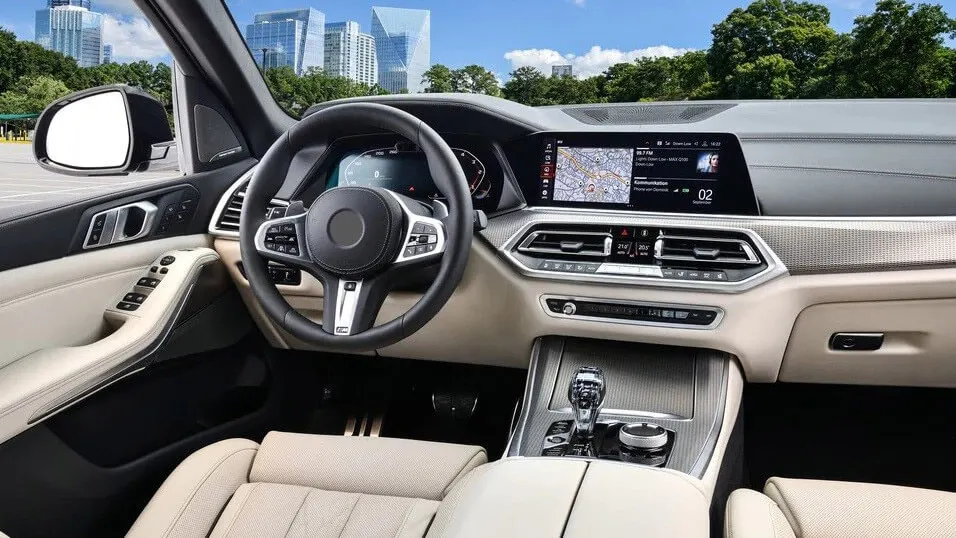
A car's interior is the area drivers and passengers touch most. Door panels, dashboards, centre consoles, headliners and boot trims are made by laminating decorative surfaces onto carrier parts.
Tough conditions
A car parked in the sun can reach 80–100 °C inside and drop to −30 °C in winter. The adhesive must survive these cycles for years without letting film or fabric lift.
OEM requirements
- Heat resistance: typically no failure under load at 80–110 °C.
- Fogging: substances evaporating from the adhesive must not film the windscreen.
- Odour and emissions: must pass interior air quality (VOC) tests.
- Appearance: no glue show-through or waviness on fabric or film.
Lamination methods and adhesives
| Method | Description | Recommended system |
|---|---|---|
| Vacuum lamination | Heated film is vacuum-formed onto the part | PU dispersion (heat-activated) |
| Press lamination | Cover and part pressed in a mould | PO / PUR hot melt |
| Edge folding | Cover edges are folded behind the part | PO hot melt, POR |
| Headliners | Fabric, foam and carrier layers | PO or PUR hot melt |
A sustainable shift
The industry is moving fast from solvent-based systems to water-based PU dispersions and solvent-free reactive hot melts, cutting emissions, protecting workers and reducing drying-oven energy.
Contact us for samples and test support for your automotive supply projects.
Need support with your application?Our technical team supports product selection and line trials.
Request a Quote