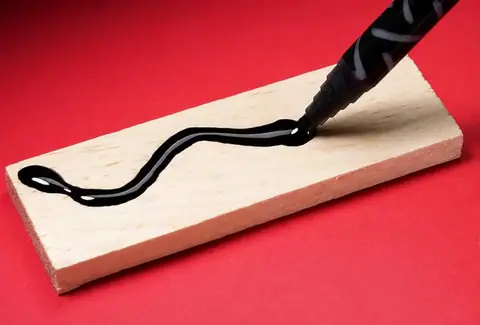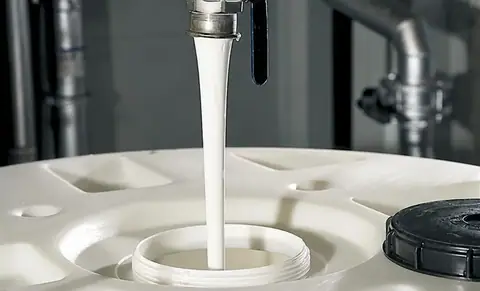



Polyurethane sealant is a one-component joint sealing and bonding material that cures by reacting with moisture in the air, forming a permanent rubber-elastic seal. It is used from expansion joints and precast panels to vehicle bodies and container manufacturing.
How it works
Applied from cartridges, foil sausages or drums, PU sealant is a non-sag paste. It first forms a skin, then cures inwards with ambient moisture. Cure speed depends on temperature and humidity. The cured material is elastomeric and accommodates joint movement.
Key properties
- High elasticity and movement capability
- Good adhesion to concrete, metal, wood and many plastics (with primer where needed)
- Abrasion and tear resistance
- Paintable after cure — the main difference from silicone
- Low-modulus (façade joints) and high-modulus (structural bonding) grades
PU sealant vs. silicone vs. MS polymer
| Property | PU sealant | Neutral silicone | MS / hybrid polymer |
|---|---|---|---|
| Paintable | Yes | No | Yes |
| UV resistance | Medium | Very high | High |
| Abrasion resistance | High | Medium | High |
| Isocyanate | Yes | No | No |
For façades and glazing in constant sunlight, neutral silicone or MS/HMX polymers are often the better choice; for floor joints, trafficked areas and surfaces that will be painted, PU sealant has the edge.
Application tips
- Clean, dry, dust- and oil-free substrates; prime porous concrete.
- Keep a width-to-depth ratio of about 2:1 and use a PE backer rod.
- Avoid three-sided adhesion.
- Fill without voids and tool before skinning.
- Do not paint or load before full cure.
See our polyurethane sealants, neutral silicones and HMX polymers, or request a quote and samples.