

Some materials resist even the strongest adhesive. The reason is usually not the adhesive but the material's surface energy.
What is surface energy?
It is a surface's tendency to attract a liquid in contact with it, measured in mN/m (dyn/cm). The rule: the adhesive's surface tension must be lower than the substrate's surface energy, or the adhesive beads up instead of spreading.
| Material | Approx. surface energy (mN/m) | Bondability |
|---|---|---|
| Aluminium, steel | > 500 (clean) | Very good |
| Glass | 250 – 500 | Very good |
| PVC (rigid) | 39 | Good |
| ABS | 35 – 42 | Good |
| PET | 43 | Good |
| PE | 31 | Difficult |
| PP | 29 | Difficult |
| PTFE | 18 | Very difficult |
In practice, surfaces below 38 mN/m need pretreatment or a special adhesive. Dyne pens give a quick check on the shop floor.
Pretreatment methods
- Cleaning: removing oil, dust and release agents; always the first step.
- Mechanical: sanding or blasting to increase contact area.
- Corona / plasma: adds polar groups to raise surface energy; common on films and plastics.
- Flame treatment: used on thicker plastic parts.
- Primer: an intermediate layer that acts as a chemical bridge.
When is a primer needed?
- On low-energy plastics (PP, PE)
- On PVC window profiles with extrusion residues
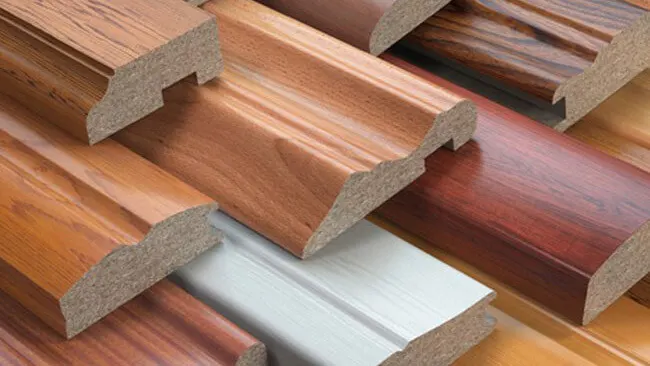
- On ABS and PP edge bands
- Where high heat and moisture resistance is required
Primers are applied as a thin film. The dried film is long-lasting, so priming and bonding can be done at different times. On surfaces such as PP, adding a crosslinker to the primer may be essential.
Dealing with a difficult surface? Send us a sample and we will test it and recommend the right primer and adhesive combination.