
Door and window production is a demanding field that expects both appearance and long-term durability from the adhesive. The finished products work for years under humidity, temperature swings and mechanical stress.
Frames and architraves: profile wrapping
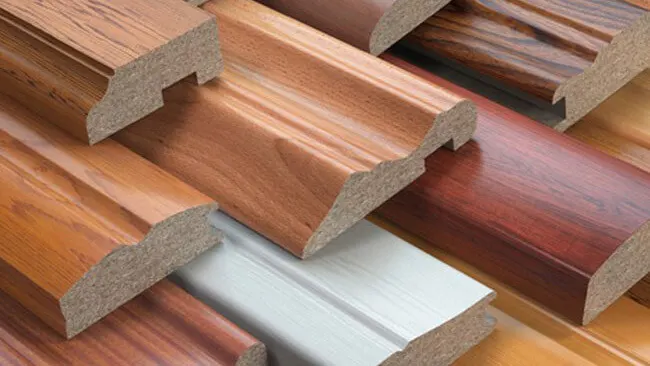
MDF or timber frames and architraves are usually wrapped with decor foil or veneer. PUR reactive hot melt leads here: a thin film, high heat resistance and moisture resistance. Using the right primer on the foil side decides how permanent the bond is.
Door leaves: pressing and lamination
Leaf surfaces are mostly laminated with PVAc dispersion in a hot press. For doors near bathrooms or exteriors, choose an EN 204 D3 or D4 class adhesive.
PVC window profiles
On decor-laminated PVC window profiles the foil is wrapped using a solvent-based primer and PUR hot melt. Exterior conditions make heat and UV resistance critical.
| Application | Recommended system | Critical property |
|---|---|---|
| Frame / architrave wrapping | PUR reactive hot melt | Heat and moisture resistance |
| Leaf lamination | PVAc D3/D4 dispersion | Water resistance |
| PVC profile lamination | Primer + PUR | Exterior durability |
| Corner joints | PVAc or 2K PU | Fast grab |
Practical tips
- Condition profiles and foils in the workshop for at least 24 hours before production.
- Run peel tests not only on day one but also after the PUR has fully cured (typically 3–7 days).
- Do not skip machine cleaning at changeovers; cured PUR residue causes defects in the next batch.