

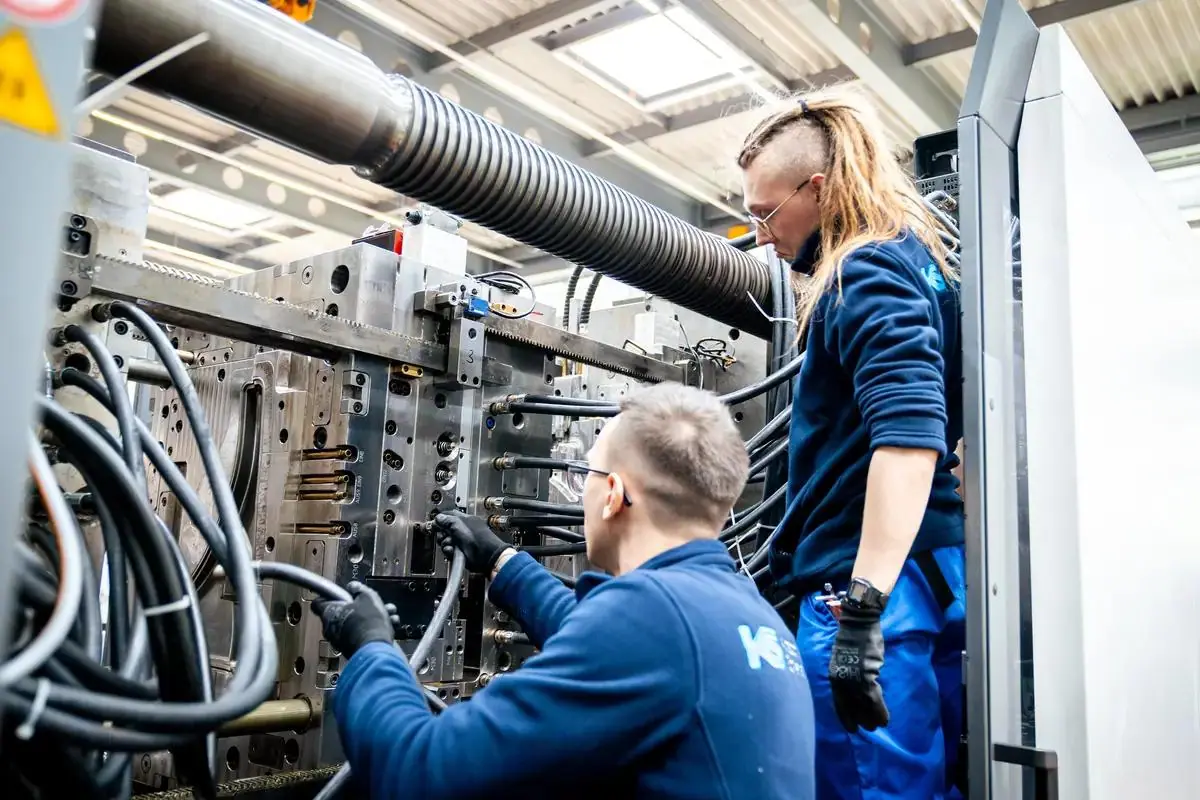
Temperature control is one of the key elements of process stability in plastics manufacturing. Chiller systems, cooling towers and process water circuits are used to cool injection molds, control product temperature on extrusion lines and remove heat from various machine components. The operating conditions of these systems are directly linked to the continuity of the production infrastructure.
Dissolved minerals in circulating water may gradually form scale or mineral deposits in pipes, heat exchangers, mold cooling channels and other heat-transfer surfaces. Accumulated deposits can restrict water flow passages and create additional resistance to heat transfer. In addition, the chemical characteristics of the water and system operating conditions can influence the development of corrosion on metal surfaces.
Maintenance practices involve two fundamental approaches: removing existing deposits and controlling new deposit formation during operation. Existing scale and mineral deposits may be removed through appropriate chemical cleaning processes, while during normal operation, the objective is to control the scaling and corrosion tendencies of the process water.
Chemical treatment should take into account the metals and other materials used in the system, water characteristics, chemical concentration, contact time and rinsing requirements. Through regular inspection and maintenance, the physical condition of cooling systems can be monitored and the effects of water-related deposits on the production infrastructure can be managed in a controlled manner.
Product ınformatıon
- Concentrated Heavy-Duty Mortar, Concrete and Limescale Cleaner, Process Water Scale and Corrosion Inhibitor