

本文目前仅提供英文版。
Elastomeric
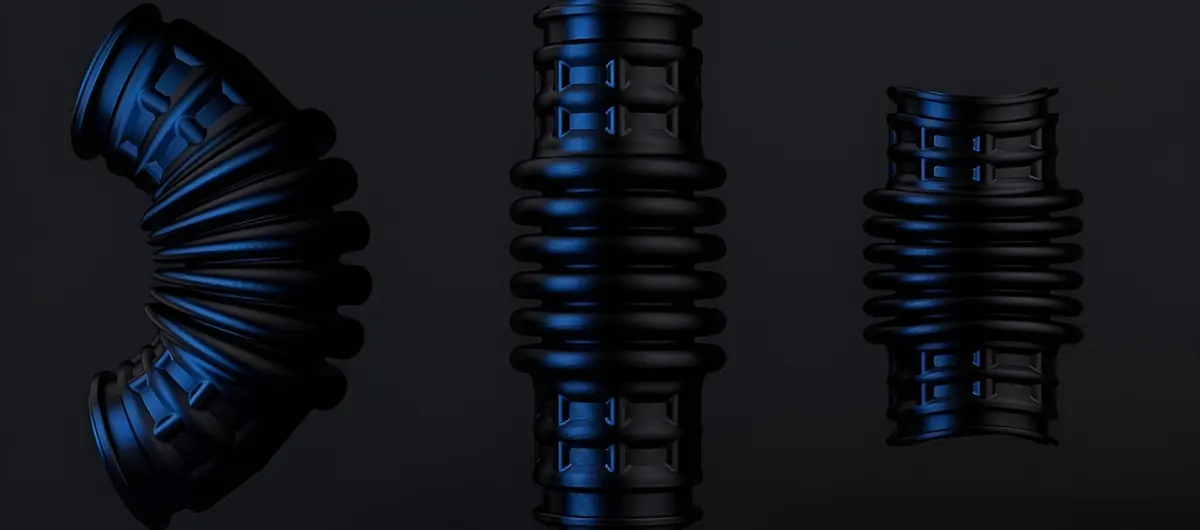
It is the general name of rubber-like polymer materials having high tensile strength that stretch when pulled and can quickly return to their original size.
- The abbreviated form of the term “elastic polymer” is elastomeric.
It is a polymer with high flexibility. With its great flexibility and suitability for deformation, rubber is an elastomer. On the other hand, plastic materials that are suitable for deformation but cannot take their original form on their own are not elastomers. For this reason, elastomers are generally characterized by the type of flexibility rather than by their greatly varying degree of flexibility.
- Many synthetic elastomers can be used instead of rubber, which is a natural elastomer.
Thermoplastic
- It means that it softens when exposed to heat and hardens again when cooled.
It has covalent bonds in the chain and van der Waals bonds within the chain. All polymers exhibit a high stiffness (high modulus of elasticity and high shear modulus) at low temperatures and are brittle.
Thermoplasts can melt and dissolve repeatedly. This has a special meaning in terms of environmental protection. Thermoplasts are perfectly suited for recycling as long as the individual types are not mixed with each other. So theoretically, a mudguard could be produced from a few thousand yogurt bowls.
- One of the important advantages of thermoplasts is that they can be welded with heat when cracks and fractures occur.
Above a certain temperature region called glassing temperature Tg (freezing temperature), chain molecules gain a certain thermal mobility. Thus, the substance becomes more bendable and ductile. However, secondary bonds and knots that occur as a result of movement prevent slipping. The material becomes thermo-elastic.
Thermoplasts have temperature-dependent properties:
- Modulus of elasticity
- Strength
- Ductility.
If the temperature rises even higher, the primary bonds begin to dissolve one by one, the molecular chains break down and become low-molecular substances. At the end, the material is damaged.
Monomer
- The word monomer is of Greek origin. Mono means one and mer means piece. In other words, monomer means "one piece".
A monomer is a small molecule that can be chemically attached to other monomers to form a polymer. Monomer is a chemistry term that denotes compounds that can react with itself or another compound to give a new product with higher bound molecular mass.
Formaldehyde
- Formaldehyde is a chemical that has been used for many years and which was originally used as a preservative to increase the shelf life of products.
Formaldehyde is a colourless substance with a strong odour, which is gaseous at room temperature. In addition to its use and presence in different products, formaldehyde is also present in nature.
Formaldehyde can be detected in the blood of mammals, in natural materials such as apples, grapes and wood. For instance, a kilogram of apples has a formaldehyde content of up to 22 mg, and fresh fish up to 100 mg/kg.
If processed incorrectly, formaldehyde can cause allergies as well as irritation of the skin, eyes, and respiratory tract. High concentrations of formaldehyde are probably carcinogenic.
Toluene
Toluene is a colorless, water-insoluble benzene-derived liquid with the characteristic odor of thinner and is also called methylbenzene. Toluene is an aromatic hydrocarbon and is used to make TNT (trinitro toluene) explosive.
Although not very polar, it is a very good solvent for many organic substances. But it is a bit difficult to remove it from the environment after the reaction. Unlike benzene, it is not carcinogenic, making it more preferred as a solvent in the industry.
Reacts violently with strong oxidants and strong acids. The methyl group on it makes toluene 25 times more reactive than benzene. Since its industrial production is from fossil fuel sources, it can be produced in large quantities relatively cheaply.
Usage areas:
- Mainly as a solvent
- Thinning paints
- As a reactant in many chemical reactions
- The most common chemical use is the production of benzene
- Plastic (rubber) production
- Ink making
- Disinfectants
- As a folluren indicator
- When oxidized, it turns into very important intermediate compounds such as benzaldehyde and benzoic acid
- It is an important carbon source
- In biochemistry, breaking down red blood cells and revealing hemoglobin
- As an octane booster in fuels
- TNT (trinitro toluene) is the main ingredient in explosives.
ABS
The chemical formula of the substance is “Acrylonitrile Butadiene Styrene” or ABS with its abbreviated name (C8H8• C4H6•C3H3N)x). It is a light and hard polymer that is widely used in molded products.
This material is a copolymer obtained by polymerization of styrene and acrylonitrile in polybutadiene. The ratios of the substances it contains can vary as acrylonitrile between 15-35%, butadiene between 5-30% and styrene between 40-60%. The result is the cross-linking of the short chains of poly (styrene and acrylonitrile) and the long chains of polybutadiene. Nitrile groups from neighboring chains polarly attract and bind other chains to form ABS, which is more durable than pure polystyrene.
Styrene gives shine and good surface to plastic. Butadiene provides rubber properties and flexibility at low temperatures. ABS can be used between -25 °C and 60 °C.
- ABS polymer material has been used since the 1940s. For the production of 1 kg of ABS, 2 kg of oil and energy are needed as raw materials.
It is a light and hard polymer material that is widely used in many products produced by ABS plastic molding. ABS plastic material is a copolymer obtained by polymerization of styrene acrylonitrile in polybutadiene. It is used in products like automotive parts, controls, toys, protective helmets, computer and TV cases, pipe materials, etc. Most important features are its harmless structure to the environment and suitability to produce durable bodies.
- ABS plastic is resistant to acids and bases and it provides good electrical insulating properties.
Features of ABS plastic:
- It is a polymer material that does not harm the environment
- Good electrical insulation
- High chemical resistance
- Easy to manufacture
- Not affected by water and humidity
- Good surface quality
- It has a lightweight and high impact resistant structure.
PES
- It is the abbreviation of polyester, which is a type of artificial fiber used in textiles.
Polyester is a category of polymers, or more specifically, condensation polymers containing ester functional groups within their main bonds. Although polyesters are found in nature, polyester generally refers to a large family of synthetic polyesters that includes all polyethylene terephthalate and polycarbonate.
The word polyester refers to a fabric that is usually made of polyester fiber. Polyester fibers are often combined with cotton fibers to produce garments with better properties. Polyester fabric has found a wide area of use in textiles. From polyester yarn can be used alone or mixed with other fibers to produce various fabrics such as taffeta, organza and satin are produced.
Polyester fibers, which are mostly mixed with cotton fiber, can also be used with wool, acrylic, silk, viscose and linen fibers. Polyester fibers, which are the most widely used synthetic fibers today, are easy to obtain and have a structure close to natural fibers. As an artificial fiber having a nature closest properties to cotton, polyester fibers have come to the fore with the increasing need for cotton.
- Polyester obtained as a result of the condensation of a dialkol and dicarboxylic acid, is examined in 3 groups in terms of its chemical structure:
- Group 1: PET fibers (polyethylene terephthalate)
- Group 2: PCDT fibers (polycyclohexyl dimethylene terephthalate)
- Group 3: Modified polyester fibers.