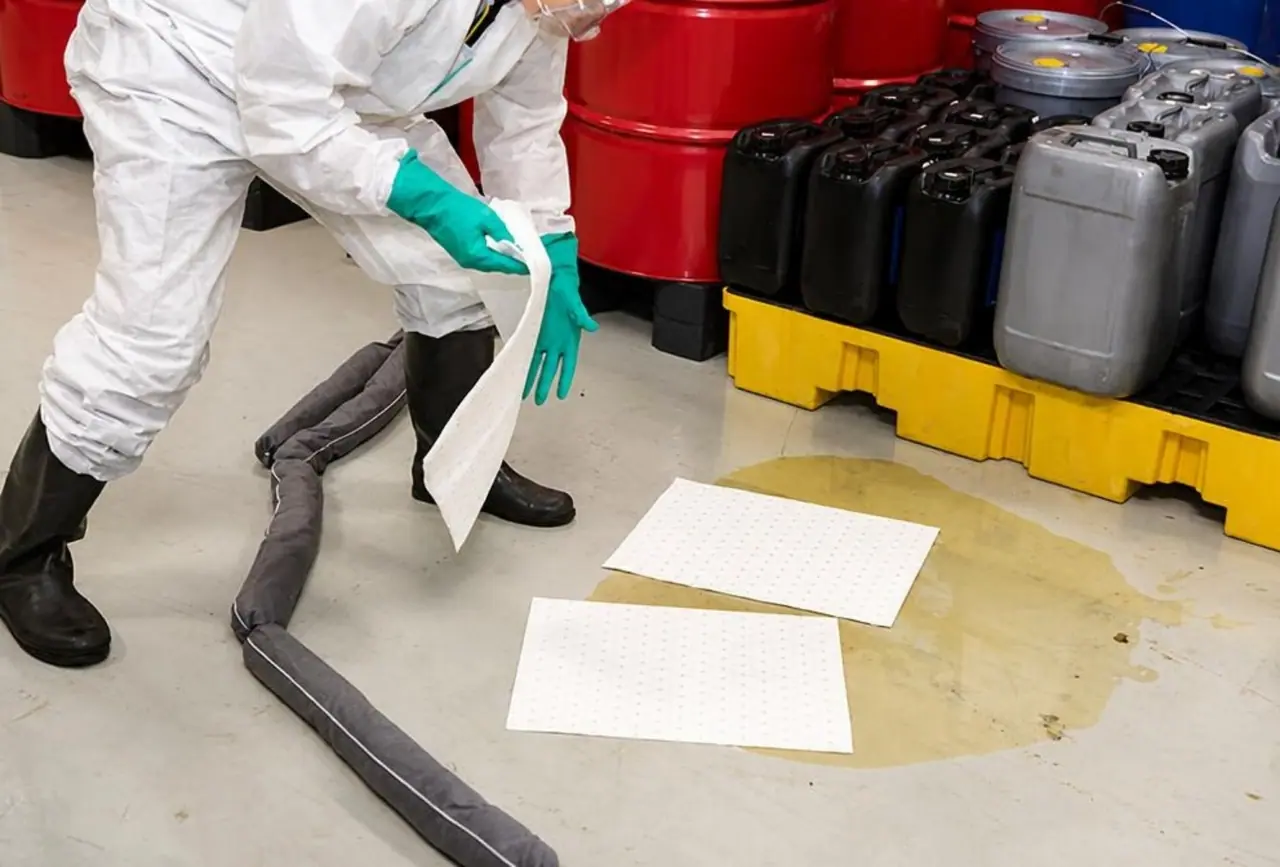


In textile manufacturing facilities, oil and liquid spills may occur during machinery lubrication, maintenance activities, equipment cleaning, and the handling or transfer of various chemicals. Particularly in dyeing and finishing areas, where a wide range of process chemicals are used, spill response should be regarded as a broader operational practice that extends beyond oil spills alone.
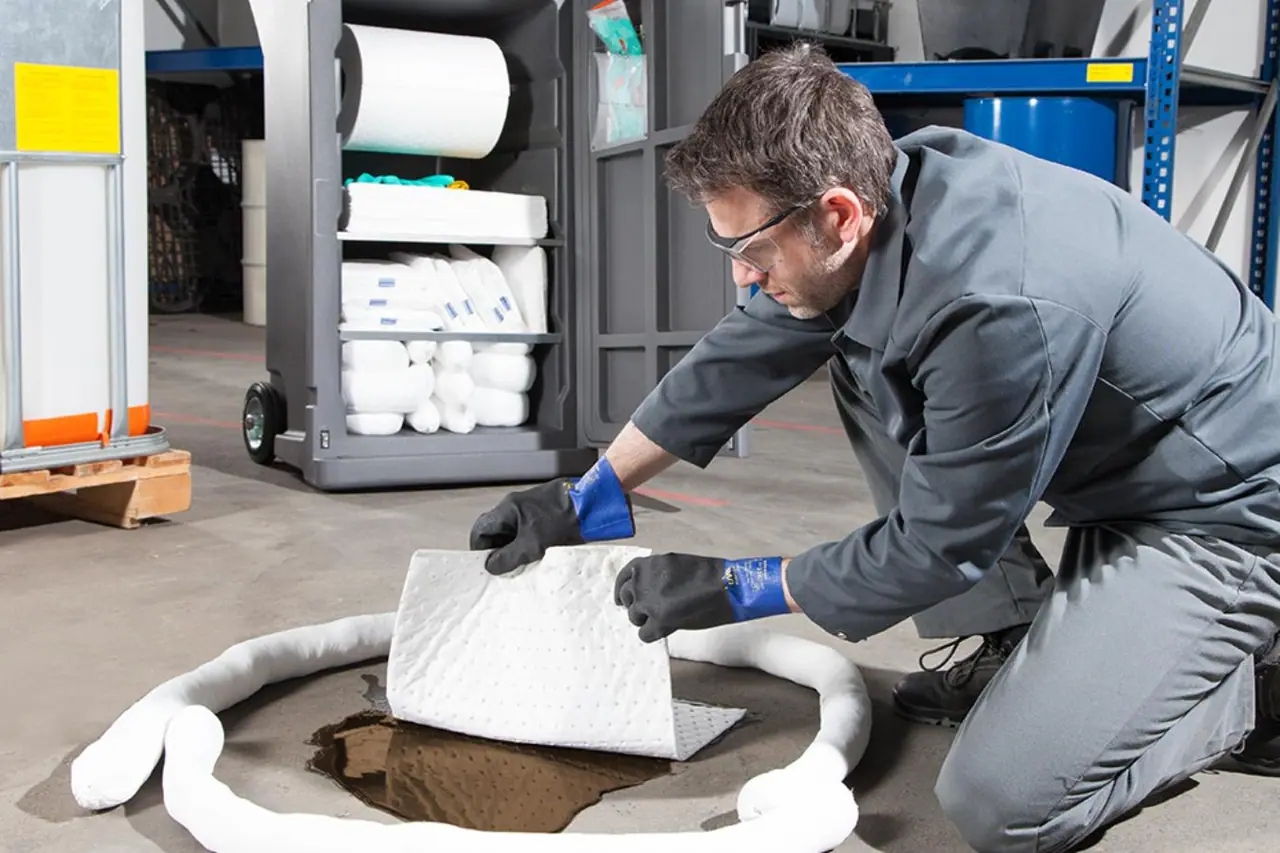
The fundamental principle of spill management is to first bring the source safely under control and limit the further spread of the liquid throughout the production area. Suitable absorbent materials should then be selected according to the properties of the spilled liquid to collect free liquid from the surface in a controlled manner.
Oil-specific absorbents may be used for machine oils and similar oil-based spills. For other chemical liquids, chemical absorbents compatible with the spilled substance should be selected. Absorbents in roll and pad form can be used around machinery, in maintenance areas or across larger surfaces, while organic absorbent materials in powder form may be suitable for localized oil spills and applications on irregular surfaces.
The management of used absorbent material following the absorption process is an integral part of the application. The absorbent material should be classified according to the properties of the liquid it has absorbed and handled in accordance with the facility’s temporary storage and waste management procedures. Spill control should therefore be regarded as a systematic facility management practice that integrates workplace organization, controlled spill response and waste management.
Product ınformatıon
- Oil-Absorbent Roll Pad, Chemical-Absorbent Roll Pad, Organic Oil-Absorbent Granular Material