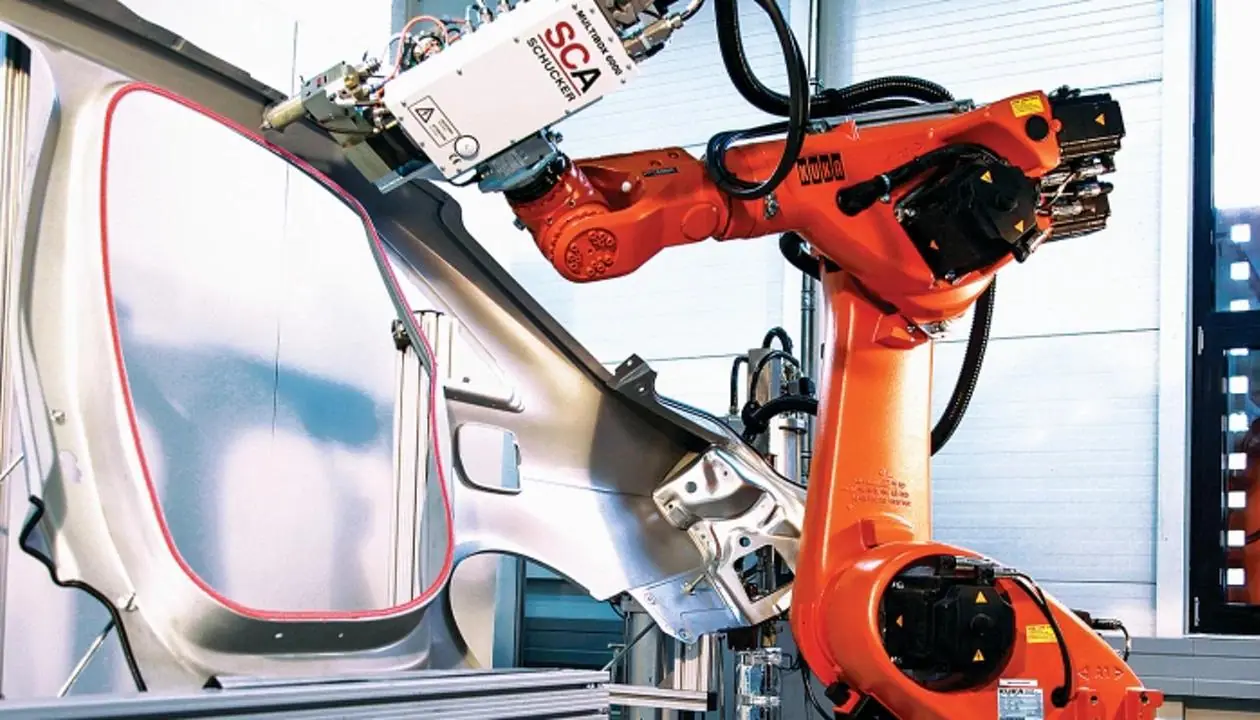
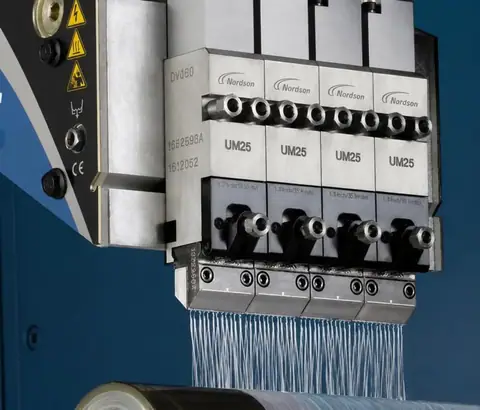

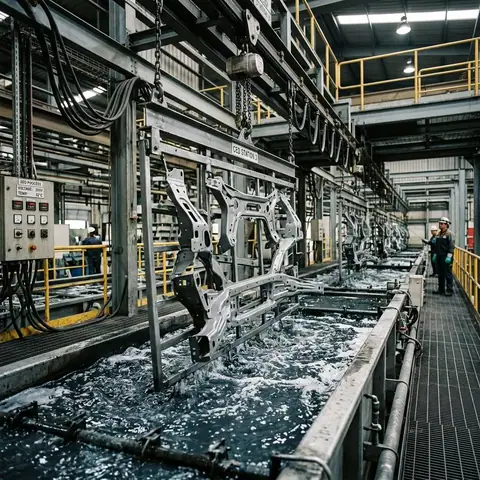

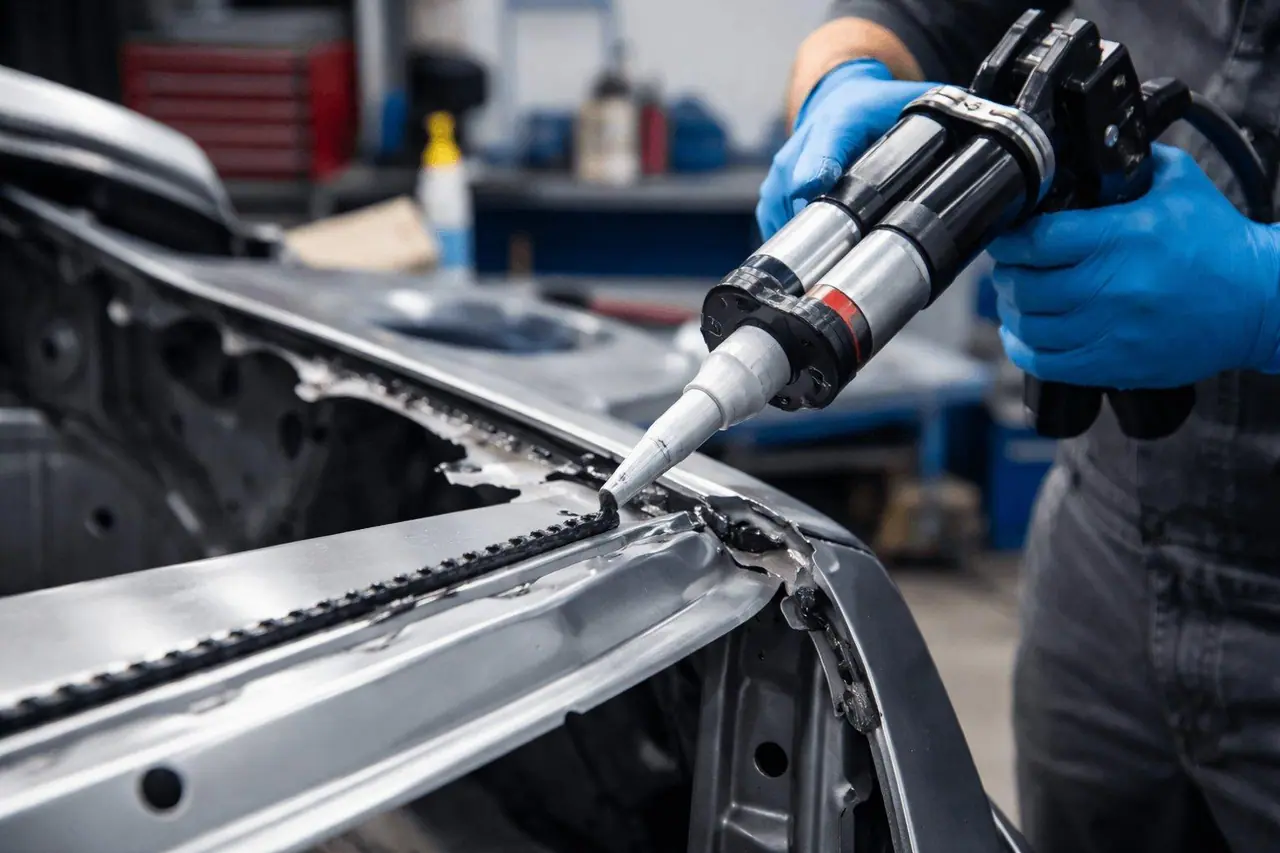
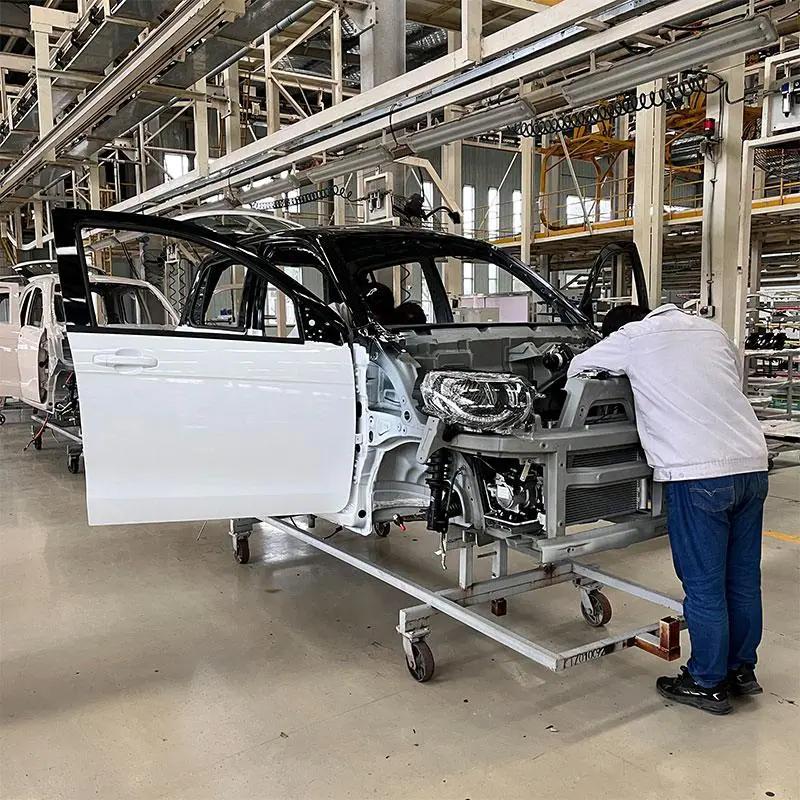
Body panel bonding is the process of joining steel, aluminum, or composite body panels using structural or semi-structural adhesives. Today, this technology is widely employed across a broad range of vehicle manufacturing sectors, including passenger cars, light commercial vehicles, heavy-duty trucks, buses, and specialty vehicles.
While body assembly traditionally relied on spot welding, MIG/MAG welding, riveting, and bolted joints, adhesive technologies have become an integral part of modern manufacturing. They now complement conventional mechanical fastening methods and, in many applications, have replaced them entirely. This is particularly important in modern vehicle designs that combine multiple materials, where adhesives enable reliable, durable, and long-lasting joints.
Body panels are not merely exterior styling components. Fenders, roof panels, door panels, tailgates, side body panels, and reinforcement members all contribute directly to vehicle stiffness, vibration behavior, and long-term durability. Consequently, the choice of joining technology is a key factor influencing overall vehicle performance.
A continuous adhesive bond line distributes loads more uniformly than conventional mechanical fasteners, reducing localized stress concentrations and extending joint fatigue life. This characteristic is especially advantageous in hybrid body structures where materials with different elastic moduli are combined.
Another important benefit of body panel bonding is the reduction of galvanic corrosion. When dissimilar metals such as steel and aluminum come into direct contact, electrochemical corrosion may occur. The elastic adhesive layer acts as an insulating barrier between the two materials, significantly reducing this risk.
As electric vehicles become increasingly widespread, lightweight vehicle design has become a major engineering priority. High-strength steels, aluminum alloys, and composite materials are now frequently combined within a single vehicle body to reduce overall weight. Adhesive technologies play a vital role in joining these dissimilar materials safely and efficiently.
Body panel bonding also contributes to improved Noise, Vibration, and Harshness (NVH) performance. The elastic bond line helps damp vibration transmission, resulting in a quieter passenger compartment and enhanced acoustic comfort.
Technologies Used
Polyurethane Technology
Polyurethane adhesives are among the leading technologies used for panel assemblies requiring high mechanical strength. After curing, they retain their elastic properties while providing excellent load-bearing capability.
Their key advantages include high tensile strength, excellent impact resistance, superior fatigue performance, vibration damping, and permanent elasticity.
Typical applications include structural panel assembly, reinforcement profiles, metal body components, and composite panel bonding.
Hybrid Polymer Technology
Hybrid polymer technology is one of the most widely used elastic bonding systems for body panel assembly. These isocyanate-free and solvent-free products cure with atmospheric moisture to form highly durable elastic bonds with excellent adhesion.
One of their greatest advantages is their outstanding adhesion to steel, aluminum, and painted surfaces. Additional benefits include permanent elasticity, low shrinkage, UV resistance, vibration damping, paintability, and excellent resistance to outdoor environmental conditions.
They are widely used for exterior body panels and a variety of auxiliary assembly applications.
Two-Component Epoxy Adhesives
Two-component epoxy adhesive systems are used in applications requiring the highest levels of structural performance.
They are selected for joining structural body components because they provide exceptionally high mechanical strength, minimal deformation, excellent heat resistance, and outstanding long-term structural stability.
Compared with elastic adhesives, epoxy systems produce a significantly more rigid structural bond.
Product ınformatıon
- Senta POLMAX, Senta BONMAX, SOUDAL Autofix Product Group (PU), SOUDAL SoudaFlex Product Group (PU), SOUDAL SoudaSeal Product Group (Hybrid Polymer), SOUDAL FixAll Product Group (Hybrid Polymer)